
Saving Rock Ridge’s Music Program
When the Rock Ridge school board announced that they were cutting parts of the music program, parents, teachers, and community members created an organization dedicated to advocating for arts and music.
Story by Tiffany Lukk. Visuals by Jerry Burnes
Msic plays a large role in Nissa Evenson’s family. They attend concerts of all genres, musicals that their kids are in, musicals they’re not in, and encourage their kids to learn new instruments.
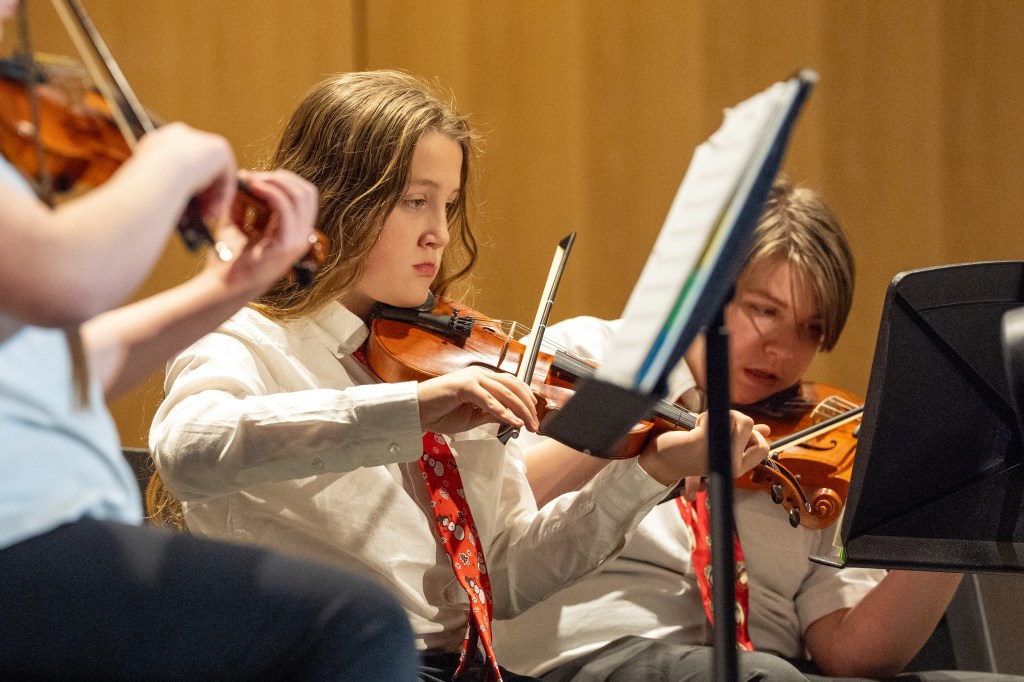
Evenson’s youngest son started fifth grade this year and, following in the footsteps of his brother, had planned to join the orchestra as a violinist.
That was until the Rock Ridge school district announced last year that it needed to make over $2.5 million in budget adjustments. In addition to teacher layoffs and program cuts, the school board made the decision to remove the fifth grade orchestra program.
“My son … was really looking forward to joining our orchestra this year, and then they made the cut,” Evenson says. “So now we can't, unless I change that.”
In response to the 2025-26 cuts, community members, educators and parents, including Evenson, organized and rallied around the music program in Rock Ridge. The result was a task force that, for the past year, worked to develop a path forward for curriculum, performance and more within the district.
“We put together a strategic plan,” said Kelsey Norvitch of the Music Task Force on March 9. “We broke things out into what we felt a successful K-12 music program would really look like. We’ve really done what we can this year, and we built what we can this year.”
****
Historically, when budget cuts need to happen, the arts are usually the first program to be targeted.
Rock Ridge was no exception.
In addition to the removal of the fifth grade orchestra program, the school board made further changes to school district’s music program including:
- Elimination of seventh and eighth grade music lessons
- Junior high music classes moved from every day to every other day
- Removal of 1.6 full-time equivalent music performance teachers
When the initial cuts were announced last April, parents and teachers took action immediately. They sent emails, made phone calls and voiced their disapproval at school board meetings.
While that was a successful strategy for unpopular cuts in the past, this time the money was much tighter, said Sheila Wilcox, the orchestra director at Rock Ridge.
“I think, as far as this time, there just isn't any other place to get money from,” she says. “Obviously, our little music faculty cuts amounted to maybe $120,000 in savings, so it’s like a drop in the bucket.”
The board reinstated a part-time music teacher prior to the 2025-26 school year, but task force members and educators said while the cuts appear to save money in the immediate future, they can lead to a decrease in enrollment and, therefore, funding.
Minnesota schools are funded on a per-pupil basis, among other factors, which Rock Ridge administrators say has not kept up with inflation in recent years. Coupled with population declines, Superintendent Dr. Noel Schmidt estimates the current board has around $3 million less to work with than school boards 20 years ago.
“Continuing to invest in this will just bring that Rock Ridge pride to the district,” Norvitch said. “When we have a strong music program, we really want to encourage people that want their kids in music to open-enroll in Rock Ridge because they see how important it is.”
****
When asked why the arts and music are so critical to the student body at Rock Ridge, members of the task force listed numerous reasons. From higher test scores to becoming better patrons of the arts, the music program helps Rock Ridge’s kids become better students and community members.
Wilcox has seen that firsthand. In her free time, she plays in the Mesabi Symphony Orchestra, a community organization that performs standard orchestral repertoire.
“Most of the people that are playing in the Mesabi Symphony have been trained all the way through high school, but some of them even through university,” she says. “And many of the members of the Mesabi Symphony are former students of mine, making up the string sections, and which is super rewarding as a teacher to see your students playing into adulthood and enjoying it.”
To illustrate to the school board the importance of the arts, the task force hired Dr. John L. Benham, a music educator who’s helped over 400 school districts save their music programs since 1981. He conducted an audit of Rock Ridge to make recommendations on how the community should proceed.
The report, which totals over 50 pages, includes relevant history of the Rock Ridge School District, short- and long-term impacts on the students, and recommendations on how to save the music program while saving the school district money.
There are many students who are open enrolled at Rock Ridge, Wilcox says.
"Continuing to invest in this will just bring that Rock Ridge pride to the district."
— Kelsey Norvitch, member of the Music Task Force
Those students each bring in over $10,000 in government funding. If the families of twelve children decide to remove their children from Rock Ridge, the school district would lose the money they gained by cutting the program in the first place, she says.
“I was surprised that double the school's average number of kids in my own program were open enrolled,” Wilcox says. “So obviously, families are choosing Rock Ridge not just for sports, but they're choosing it for the arts.”
Evenson’s family is one of them.
“There are a lot of people, including us, who are actually open enrolled to this school, because we live in a different school district,” she says. “I know a lot of families whose children go to Rock Ridge because of the arts program and music programs that are also out of district.”
The removal of the fifth grade orchestra program won’t just affect the fifth grade, it’ll affect all present and future students as well. According to the report, “starting instrumental music later than grade 5 results in a minimum loss of participation at the secondary level of 65%.”
These decisions could have a catastrophic, long-term effect on Rock Ridge: “The community recognizes the potential for the complete collapse of the music program with the implementation of changes approved by the board for the 2025-2026 academic year.”
To stop that issue at its root, Dr. Benham recommended the school board reinstate the music cuts made by the school board and for the formation of the task force.
****
The task force and the school board have discussed multiple ways to help preserve the music program, but beyond the half-time teacher, none have progressed to a board vote.
Among those was an excess levy referendum, where taxpayers would be asked if they’d be willing to pay slightly more in property taxes in order to help save certain programs.
Another was moving the lessons to community education, but that would come with its own set of issues. For example, students and their families would need to pay fees to participate, find transportation to lessons and likely receive education from less capable instructors than what they’d have at school.
The strategic plan outlined by the task force this March asked the board to increase the half-time teacher to a full-time position and allow music instructors to help build out their program’s scheduling to best teach the curriculum.
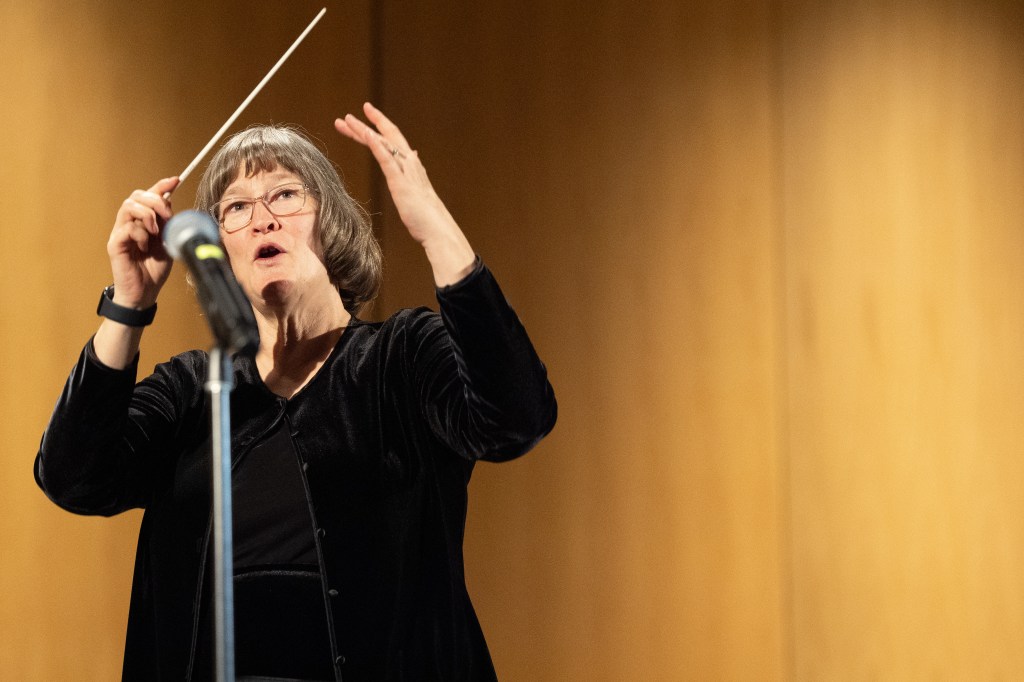
“We are looking forward to more meetings where we can bring some of these ideas out and maybe investigate them a little further,” Wilcox said. “And see how we can continue to help move the district forward in a really positive way through our music program and through an increase in student enrollment.”
Rock Ridge board members considered the full-time teacher as part of a larger budget package, but stripped it from the vote and delayed a decision until later in April.
Instead, the half-time teacher was included in the initial staff cuts for the 2026-27 school year, and the full-time position was not placed on the agenda.
“This work has been in progress for over a year and the lack of acknowledgement or follow up was really disheartening to me,” Norvitch said on April 13. “It is unacceptable given the level of time, collaboration and community invested in this work.”
Task force members said they hoped the item would be on the board’s April 27 agenda. It was not.
About the Author
Tiffany Lukk is a freelance writer for Iron Range Today. She has previously written for Mpls. St.Paul Magazine, The Current and other publications.


